
Exoplanet Discoveries: Exploring Worlds Beyond Our Solar System
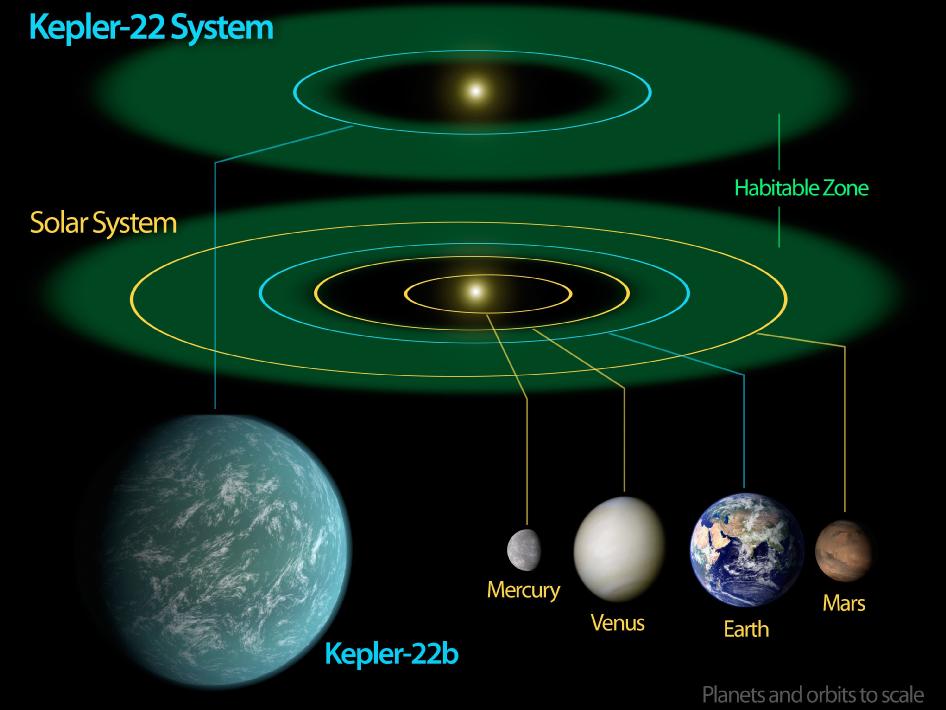
Exoplanet research not only provides insight into the formation and evolution of planetary systems but also enhances our understanding of the conditions necessary for life. As technology continues to evolve, so do the methods and strategies used to detect and analyze these far-off planets, pushing the boundaries of our knowledge and imagination.
What Are Exoplanets?
Exoplanets, or extrasolar planets, are planets that exist beyond the confines of our Solar System, orbiting other stars. Unlike the eight known planets in our Solar System, exoplanets are located in entirely different stellar environments, which may include binary star systems, young stars, or even white dwarfs. They vary widely in size, composition, and atmospheric properties, ranging from gas giants much larger than Jupiter to rocky, Earth-like planets.
How Are Exoplanets Discovered?
The discovery of exoplanets is a challenging endeavor due to their vast distances from Earth and their proximity to much brighter stars. Several advanced techniques have been developed to detect these elusive planets, each contributing uniquely to the expanding catalog of known exoplanets.
Transit Method: This is the most successful and widely used method for finding exoplanets. It involves observing a star for periodic dips in brightness caused by a planet passing in front of it. The Kepler and TESS (Transiting Exoplanet Survey Satellite) missions have used this technique to identify thousands of potential exoplanets, providing valuable data on their size, orbit, and sometimes even atmospheric composition.
Radial Velocity (Doppler) Method: By studying the slight wobble in a star’s position due to the gravitational pull of an orbiting planet, astronomers can infer the presence of an exoplanet and estimate its mass. The radial velocity method has been instrumental in confirming the existence of planets too small to detect through transits alone.
Direct Imaging: While extremely challenging, direct imaging involves capturing actual pictures of exoplanets by blocking out the light of their parent stars. This technique is best suited for large planets orbiting far from their host stars and has enabled astronomers to study the atmospheric and surface properties of these distant worlds.
Gravitational Microlensing: When a planet passes in front of a more distant star, its gravitational field acts like a lens, magnifying the light of the background star. This temporary brightening can indicate the presence of a planet, providing insights into planetary systems that might otherwise be difficult to detect.
Milestones in Exoplanet Discoveries
The first confirmed discovery of an exoplanet orbiting a Sun-like star came in 1995, when astronomers Michel Mayor and Didier Queloz identified 51 Pegasi b—a hot Jupiter-like planet closely orbiting its parent star. This discovery marked the beginning of a new era in astronomy, proving that planets around other stars are not just theoretical constructs but observable realities.
Since then, missions like Kepler and TESS have identified thousands of exoplanets, revolutionizing our understanding of the universe. Kepler, in particular, was a game-changer, discovering over 2,600 confirmed exoplanets and hinting that the Milky Way alone may harbor billions of planets. Recent observations by the James Webb Space Telescope (JWST) have also opened new frontiers in exoplanet research, allowing for the detailed analysis of exoplanet atmospheres, which may contain biosignatures or other indicators of habitability.
Exoplanet Classification and Diversity
Exoplanets are incredibly diverse, and scientists have developed various classification systems to categorize them:
Hot Jupiters: These are gas giants similar to Jupiter but orbit extremely close to their stars, resulting in scorching temperatures. Their proximity to their host stars makes them relatively easy to detect, hence their prevalence in early exoplanet discoveries.
Super-Earths: These are rocky planets larger than Earth but smaller than Neptune, and they often occupy the “habitable zone,” where conditions might allow for the presence of liquid water.
Mini-Neptunes: Planets that are smaller than Neptune but have thick atmospheres, likely composed of hydrogen and helium. Their surface conditions are typically inhospitable to life as we know it.
Earth-like Planets: These rocky planets are similar in size and composition to Earth and may reside in the habitable zone of their parent star. These are the primary targets in the search for potentially habitable worlds.
Rogue Planets: These are planets that do not orbit any star, drifting through space on their own. They are detected through gravitational microlensing and offer a unique perspective on planetary formation.
The Search for Habitable Exoplanets
One of the primary goals of exoplanet research is to find planets that could potentially support life. This quest focuses on identifying planets within the “habitable zone” of their parent stars—regions where temperatures are just right for liquid water to exist. However, being in the habitable zone does not guarantee that a planet is habitable; factors like atmospheric composition, magnetic field strength, and geological activity play crucial roles in determining whether a planet can sustain life.
Prominent discoveries like Proxima Centauri b, a planet located in the habitable zone of our closest stellar neighbor, and the TRAPPIST-1 system, which has multiple Earth-sized planets, have fueled excitement about the possibility of finding habitable exoplanets. Scientists are also looking for biosignatures, such as oxygen or methane, in exoplanet atmospheres using advanced telescopes like the JWST and the upcoming European Extremely Large Telescope (E-ELT).
The Future of Exoplanet Research
The future of exoplanet exploration holds immense promise. Upcoming missions such as the PLATO (Planetary Transits and Oscillations of Stars) and ARIEL (Atmospheric Remote-sensing Infrared Exoplanet Large-survey) are expected to provide even more detailed information about exoplanet compositions, atmospheres, and climates. These missions, combined with advancements in AI and machine learning for data analysis, will enable scientists to narrow down the search for potentially habitable planets and even detect signs of extraterrestrial life.
The discovery of exoplanets has not only expanded our knowledge of planetary science but also transformed our view of the universe. As our detection techniques and technologies improve, the list of known exoplanets will continue to grow, bringing us closer to finding other Earth-like worlds—or perhaps even discovering that we are not alone in the cosmos.
(This article is for informational purposes only and does not constitute professional advice.)
Hiç yorum yok: