
The Origins of Norwegian Mythology
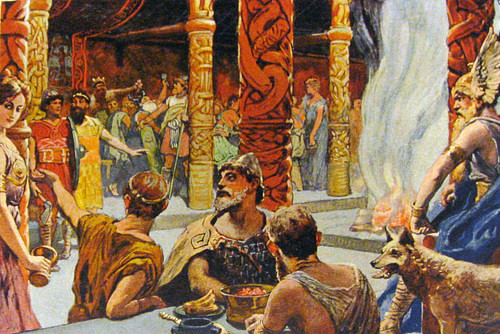
The foundation of Norwegian mythology, like other Scandinavian mythologies, is based on the pre-Christian beliefs of the Norse people, which date back to the Viking Age (circa 8th to 11th century). These myths were passed down orally through generations and later documented in texts such as the Poetic Edda, Prose Edda, and Heimskringla. Written by Icelandic historians such as Snorri Sturluson, these sources have preserved the legends, making them accessible to modern audiences.
The Pantheon of Norse Gods and Goddesses
The Norse pantheon is populated by a diverse array of gods, goddesses, and supernatural beings, each with distinct personalities, domains, and roles within the cosmos. The gods are primarily divided into two main families: the Aesir and the Vanir.
The Aesir
The Aesir are considered the principal gods of Norse mythology, associated with power, warfare, and governance. They reside in Asgard, one of the Nine Worlds. Notable members of the Aesir include:- Odin: The All-Father and ruler of the gods, Odin is the god of wisdom, war, and death. He is often depicted as a one-eyed, long-bearded figure, carrying his spear, Gungnir, and accompanied by his two ravens, Huginn (thought) and Muninn (memory).
- Thor: The god of thunder and storms, Thor is the protector of mankind. Wielding his mighty hammer, Mjölnir, he battles giants and other creatures threatening the order of the universe.
- Frigg: Odin’s wife and the queen of Asgard, Frigg is the goddess of marriage, motherhood, and prophecy.
The Vanir
The Vanir are gods associated with fertility, nature, and prosperity. After a great war between the Aesir and the Vanir, a truce was formed, and the two families exchanged members, leading to a harmonious coexistence. Important Vanir deities include:- Njord: The god of the sea and wind, Njord is associated with wealth and seafaring.
- Freyr and Freyja: Twin siblings, Freyr is a god of peace and fertility, while Freyja is the goddess of love, beauty, and war.
The Nine Worlds and Yggdrasil
Norwegian mythology portrays the universe as an intricate structure known as Yggdrasil—the World Tree. Yggdrasil connects the Nine Worlds, each representing different realms of existence:
- Asgard: The realm of the Aesir gods.
- Midgard: The realm of humans.
- Vanaheim: The realm of the Vanir gods.
- Jotunheim: The land of the giants (Jotnar).
- Niflheim: The world of ice and mist.
- Muspelheim: The fiery world of the fire giants.
- Alfheim: The realm of the light elves.
- Svartalfheim: The world of the dark elves.
- Helheim: The underworld, ruled by the goddess Hel, where souls of those who died of sickness or old age reside.
Each world has its own unique features and inhabitants, creating a cosmology that is complex and interconnected.
Key Myths and Legends
The Creation Myth
According to Norse mythology, the universe began in a vast emptiness known as Ginnungagap. From the merging of fire from Muspelheim and ice from Niflheim, the first being, Ymir, emerged. Odin and his brothers later killed Ymir, using his body to create the world, and established the order of the cosmos.Ragnarok: The End of the World
One of the most famous Norse myths, Ragnarok, foretells the end of the world in a cataclysmic battle between the gods and the giants. Odin, Thor, and many other gods are destined to perish, leading to the destruction and subsequent rebirth of the universe. This myth symbolizes the cyclical nature of life, death, and renewal.The Death of Balder
Balder, the god of light and purity, was beloved by all. His death, orchestrated by Loki, the trickster god, marks the beginning of the events leading to Ragnarok. The story of Balder’s death highlights themes of love, betrayal, and the inevitability of fate.
The Influence of Norwegian Mythology
Norwegian mythology has had a profound influence on literature, art, and popular culture. From J.R.R. Tolkien’s The Lord of the Rings to Marvel’s depiction of Thor and Odin, these ancient stories continue to inspire modern interpretations. Additionally, Norse myths are celebrated in festivals, and their symbols, such as runes and Yggdrasil, are still cherished in Scandinavian culture.
Conclusion
Norwegian mythology is more than just a collection of stories; it’s a reflection of the values, fears, and aspirations of the Norse people. With its rich characters, intricate cosmology, and profound themes, it offers timeless lessons and continues to captivate audiences around the world.
(This article is for informational purposes only and does not constitute professional advice.)
Hiç yorum yok: