
1. What Are Gravitational Waves?
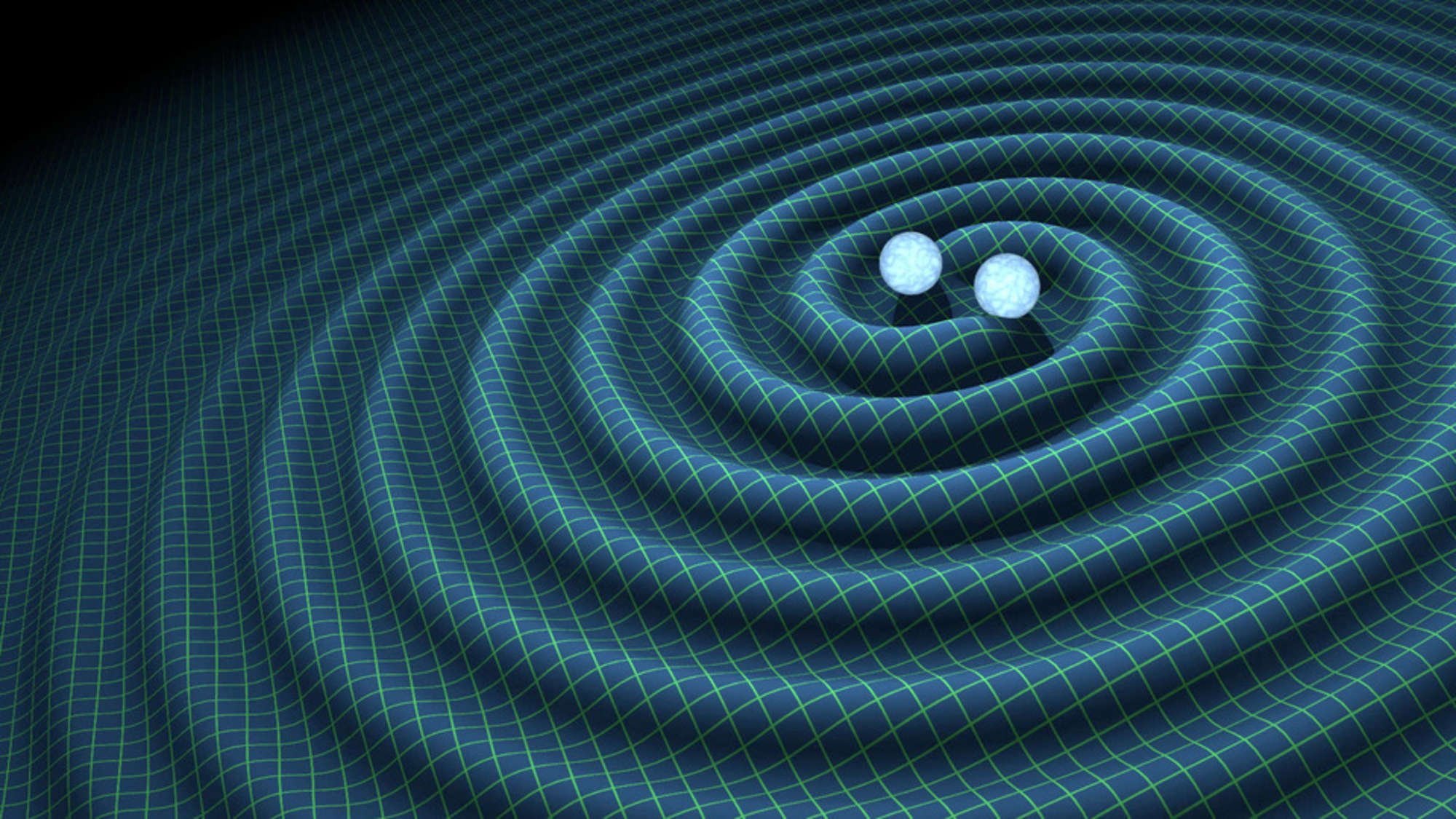
Gravitational waves are distortions in spacetime that travel outward at the speed of light. When massive objects accelerate, they cause fluctuations in the surrounding spacetime, much like a stone thrown into a pond creates ripples on the water’s surface. These waves carry information about their origins and the nature of gravity, offering insights into events that are often hidden from view.
2. How Are Gravitational Waves Generated?
Gravitational waves are produced by a variety of astrophysical events, including:
Merging Black Holes: When two black holes orbit each other and eventually collide, they emit gravitational waves as they spiral closer together. This event produces some of the strongest gravitational waves detectable.
Neutron Star Collisions: Similar to black hole mergers, when two neutron stars collide, they create a burst of gravitational waves along with electromagnetic radiation. This type of event can provide valuable information about nuclear physics and the creation of heavy elements.
Supernova Explosions: The explosion of massive stars in supernova events can also generate gravitational waves. These waves arise from the asymmetrical collapse of the star’s core.
3. Detecting Gravitational Waves
Detecting gravitational waves is a significant challenge due to their incredibly weak nature. The first successful detection was made by the LIGO (Laser Interferometer Gravitational-Wave Observatory) in 2015. The observatory uses a technique called laser interferometry, where lasers are split into two beams that travel down long arms, reflecting off mirrors. When a gravitational wave passes through, it slightly stretches one arm while compressing the other, creating a measurable change in distance.
4. The Importance of Gravitational Waves
The study of gravitational waves provides a unique perspective on the universe. Unlike light, which can be absorbed or blocked by matter, gravitational waves pass through objects without any obstruction. This means they carry information about cosmic events that we cannot see through traditional electromagnetic observations.
Gravitational waves have several important implications:
Testing General Relativity: Observing the properties of gravitational waves allows scientists to test Einstein’s theory under extreme conditions, confirming its predictions or revealing new physics.
Understanding the Universe’s Structure: Gravitational waves help scientists learn more about the distribution and behavior of massive objects in the universe, shedding light on the formation of galaxies and the dynamics of dark matter.
Astrophysical Insights: By studying gravitational waves, researchers can gain insights into the lives and deaths of stars, the properties of black holes, and the formation of neutron stars.
5. Future of Gravitational Wave Astronomy
The field of gravitational wave astronomy is still in its infancy, but it holds immense potential for future discoveries. New observatories, such as the European Space Agency's LISA (Laser Interferometer Space Antenna), are set to launch in the coming years. These space-based detectors will enhance our ability to observe low-frequency gravitational waves, allowing us to study a wider range of cosmic events.
Conclusion
Gravitational waves represent a groundbreaking advancement in our understanding of the universe. They provide a new way to observe and explore the cosmos, offering insights into some of the most powerful phenomena in existence. As technology and detection methods improve, the study of gravitational waves will continue to reveal the mysteries of the universe, deepening our understanding of the fundamental forces that shape it.
This article is for informational purposes only and does not constitute professional advice.
Hiç yorum yok: